

What Is a Carbon Footprint?

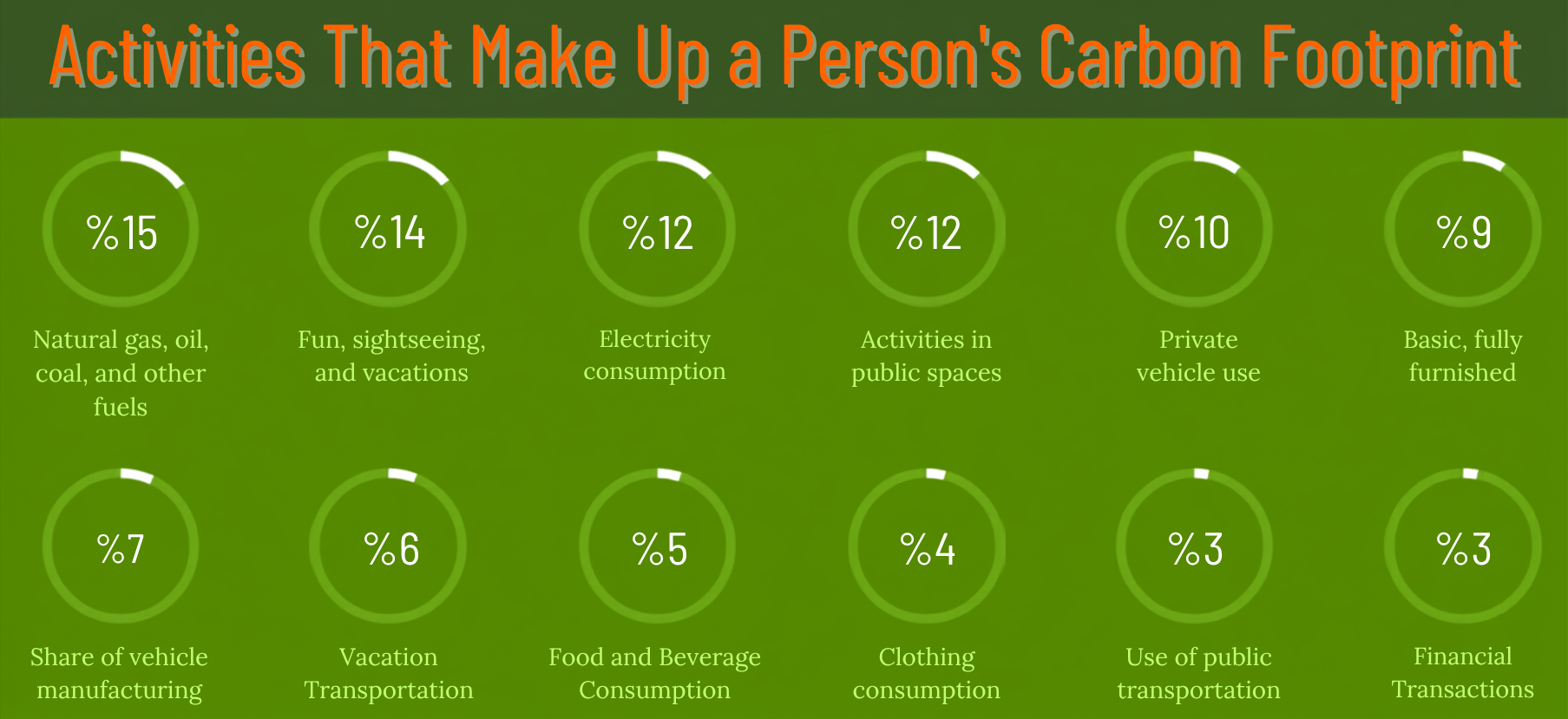
How Can You Reduce Your Carbon Footprint?
- You can reduce your individual carbon footprint by taking simple measures.
- Consume only what you need and avoid buying unnecessary products.
- Unnecessary electricity use directly increases your carbon footprint. Unplug and turn off any devices that are not in use but are still consuming electricity.
- You can reduce your carbon footprint by walking to more places within the city.
- Air travel is one of the leading factors that increase your carbon footprint. Therefore, avoid flying to destinations you can reach using alternative modes of transportation. If you must fly, you can help reduce emissions by choosing direct flights instead of connecting flights. A 1-hour flight = 182 kilograms of CO2e
- You can also reduce your carbon footprint by using public transportation instead of a private vehicle or by walking short distances.
- When buying or renting a vehicle, choose low-emission options.
- By ensuring your home has good exterior insulation, you can reduce both your energy costs and your carbon footprint.
- Choose heating with electricity and solar energy instead of fossil fuels. The carbon footprint of 1 kg of coal is 2.87 kg CO2e
- Using energy-efficient appliances and light bulbs reduces your carbon footprint and lowers your energy costs. Therefore, opt for these types of products even if they are more expensive initially.
- You can reduce your energy consumption and carbon footprint by using LED light fixtures.
- You can help reduce your carbon footprint by using natural resources such as water in moderation and practicing water efficiency. If you wash dishes by hand and let the water run continuously—as many people do—you’re leaving a carbon footprint of = 8 kilograms of CO2e; if you use a dishwasher, it’s = 0.9 kilograms of CO2e.
- When you consume fruits and vegetables out of season or consume imported products, keep in mind that these products are produced using more energy or transported to our country, which increases your carbon footprint. Rice has the highest carbon footprint among agricultural foods; the carbon footprint of 1 kg of rice is 4 kg CO2e.
- Consume less red meat. The methane gas emitted during red meat production is 72 times more harmful to the atmosphere than CO2 over a 20-year period. The carbon footprint of 1 kg of beef is 34.6 kg CO2e.
- Remember that producing unnecessary waste leads to more CO2 emissions and increases your carbon footprint. Therefore, be sure to place your waste in recycling bins for recycling and/or reuse.
- Plant a tree. Each tree planted can absorb 12 kg of CO2 per year.
Nilay Canbay Öztürk, Architect, LEED Consultant